In Conversation on the Singles Kicking Off Faye’s Upcoming Album
By: Carley Farryl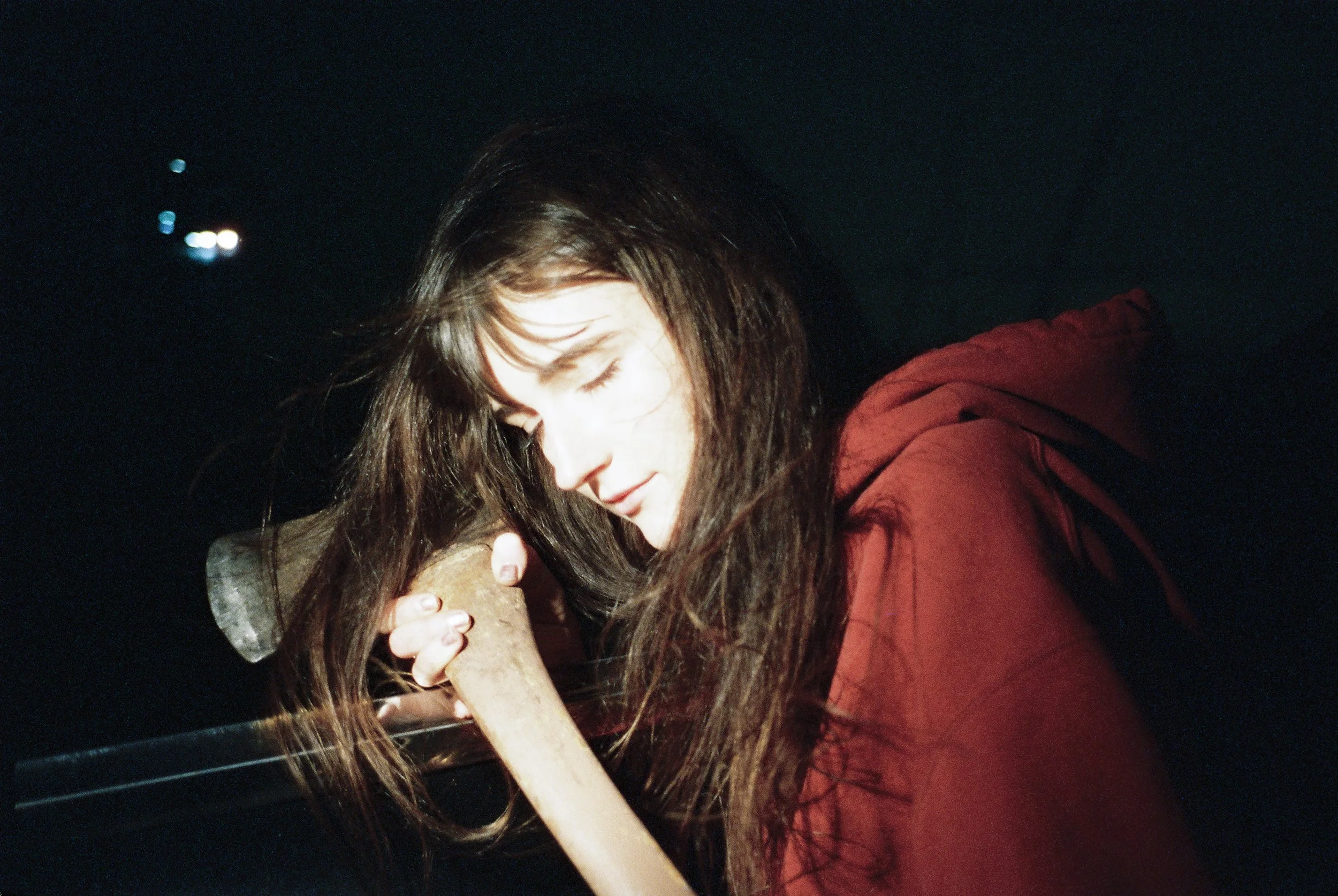
Photo by Marley Chaney
New York City singer-songwriter Nadia Faye released her single “drift” on October 7 as a segue into her new musical era. In the last year since her debut album Gardening, Faye experimented with her artistic vision and found her truest sense of self in simple writing and production. As she moves forward toward her sophomore album, Hunger Machine, out January 22, 2027, the artist expands into visual elements and video. Toying with sharp visual and lyrical contrast, Faye creates an immersive encounter with unfulfilled desire for her audience that mirrors her own experiences.
Between single releases, Nadia Faye sat down with warmly to discuss the evolution of her sound from debut to now, and how her upcoming album explores all facets and extreme qualities of desire.
warmly: Just kick us off! I'm wondering, what did the writing process for “drift” look like?
Nadia Faye: When I wrote “drift”, I had gone through a period of heavy experimentation with my sound since the project that came before it. I write most of my songs alone, so I wrote “drift” just in my apartment with an acoustic guitar. I had a few songs called “drift” before this “drift”, which typically does tend to happen.
How do you narrow that down?
It's not really a conscious thing. I keep writing the song until I feel like it's the song. When I have gotten what I want, I typically just run with it, and I know. I'll look back in my Notes app– I write all my lyrics in my Notes app– if I type in “drift” into my Notes app, some of them are a completely different thing.
I was curious, based on your debut album Gardening– you use a lot of earthly or natural elements as motifs to carry your lyrics through. And I know with “drift”, obviously, it's water. How did you come to that concept?
I tend to gravitate a lot towards different natural elements, nature in general. When I start to write a song, I'll have an emotion that I want to write about. I like to feel like I'm in a place or feeling all the senses. With “drift”, I gravitated towards water because of how unstructured it is. It reflects the song with how uncontrollable the emotions and the feelings from this other person are.
I feel like “drift” is sonically so different from your previous work. It's a lot more grounded, I felt, in that it's acoustic-driven. Some might view this as moving “backwards” sonically, but it seems more like a testament to your current voice. What led you to this change? Where did you find this idea, and where do you see your sound going?
With Gardening, I was a lot younger. I started making that album when I was 16. But once I got to NYU, I was surrounded by so many musicians—I kind of was like, Wait, I don't think this is cool enough. I went through a crisis of not really understanding who I was in my art. I questioned my sound, which I never really do. So, I just got really heavily into experimenting, and I was making electronic music for a time. And then I realized that what I love is sitting down with my guitar and writing a song, and I forgot how to do that.
With “drift”, and this batch of songs that I have coming, I sat down, wrote one of them, and then I wrote this whole collection of music in 10 days. It was like they were all waiting to come out, and I just had to let it happen and let it be what it is.
They were ready for you.
My interpretation of Gardening is that it’s a little more immature. There are so many moments of bigness: How big can we make this sound? Or how dramatic can this moment be? I'm very interested in letting things be what they are and practicing restraint.
Alright, I'm curious; I really enjoyed the music video for “drift”, and the contrast between the airy, light dynamic that you see versus what you're actually listening to. How do you come up with your video concepts, and how do those translate into the overall story you're trying to tell?
“drift” is kind of the first video. I didn't do any videos for Gardening, and I was very against music videos for a time. With this project, I really wanted it to feel super immersive and be a world that you could be a part of.
With the “drift” music video, I was in L.A. shooting a bunch of different things. I worked with an amazing creative director who has an amazing eye for this. It was a great process and super fun. But we went to a bunch of places in and around L.A., and the story formed as we were shooting. It was really cool. We had this sheet: what can we do with this sheet? It lends itself really well to the story that we're telling in the song. It was cool to see that come together and the contrast. But it flowed very organically.
I was hoping that we could chat a bit about what's coming next for you. I found “hatchet” to be this very intricate and sort of tense moment overall, and in such a unique way. How does this continue or summarize the album? How does it encapsulate everything you're trying to share?
The contrast between “drift” and “hatchet”—because I do feel like they're very different mood-wise and overall emotional register— is that they represent two extremes of what I like to do and songs I like to make. I love a fun, easy-listening song like “drift”, but “hatchet” is one of the songs on the album I feel the most proud of.
Why is that?
It's doing something different. I'm telling a very strong narrative in the lyrics, and emotionally it's heavier.
It's interesting, these being the first two singles. Maybe you would feel like a little bit of whiplash going from one to the other? But I think it gives a good picture of the whole scope of what you're going to get from the album.
Even with that stark contrast in sound, you still hear the narrative. You see how the story got there, and I think having those central songs is going to be so indicative of your own storytelling voice. Good for you that you found it.
I was also quite curious about the instruments—with the banjo and the cello.
I've always loved strings. It's the one instrument I wish I could play. I've weirdly always loved the banjo, too. Those two things for me, specifically cello and banjo, have always been instruments that I've wanted to have. I am drawn to these instruments because they feel very emotional to me.
Every time I hear the banjo, the cello, or any strings, it makes me very emotional. And “hatchet” just has a cello, but on the album we have a string quartet. I'm super adamant that we don’t record anything in a studio. But in the end, we went into a studio and recorded with a string quartet because I was like, we need that.
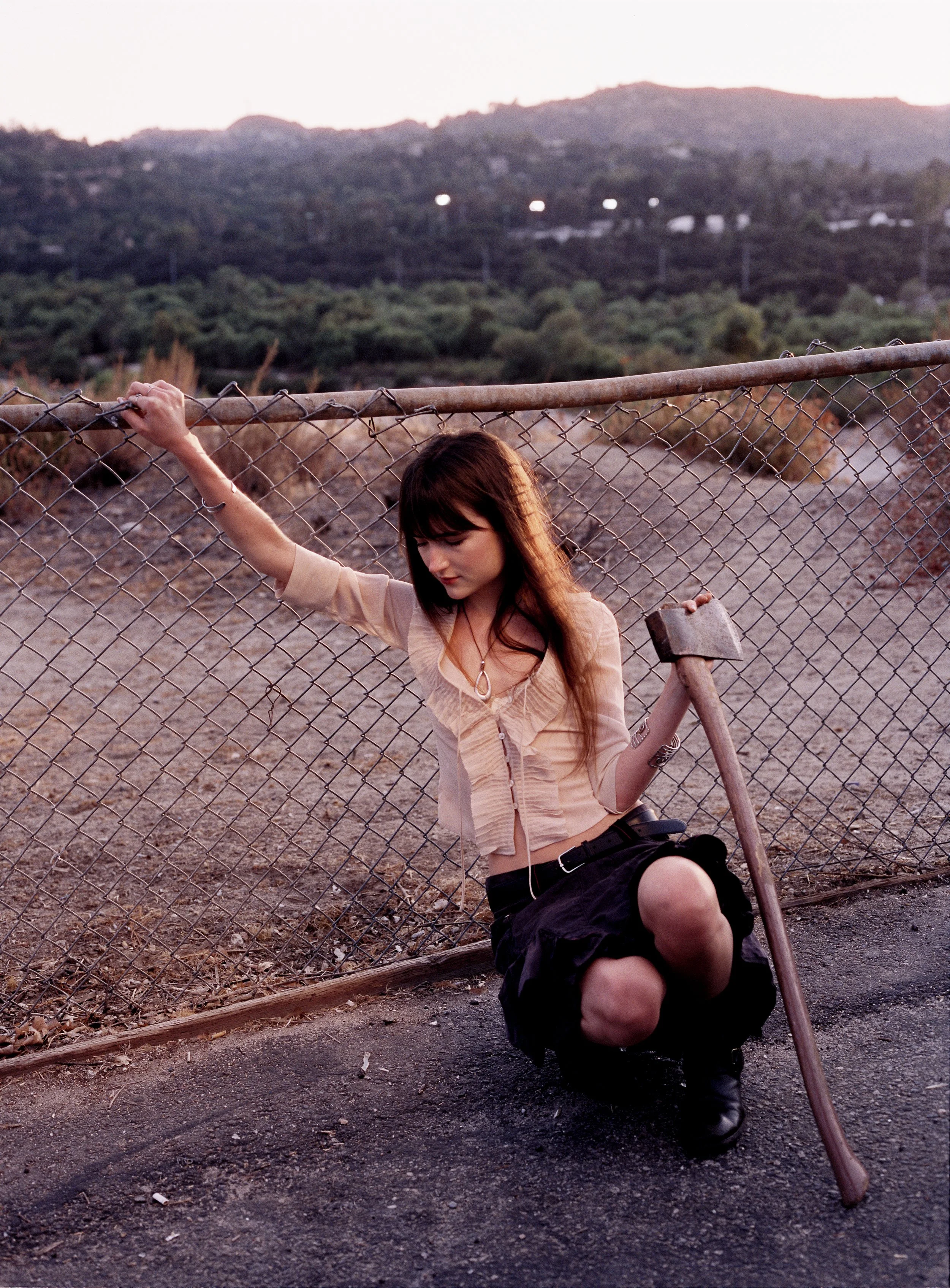
photo by Marley Chaney
You said you write your songs with your guitar. Do you play any other instruments?
Yeah, I play guitar; I play piano– roughly. I would say I play most instruments as a producer would play them.
With guitar… I record it differently because I'm not a good guitar player, so I'll layer a bunch of different parts to make one part, because I can't do a crazy solo or something. It creates a different result, which I think is cool.
It’s so interesting that you're playing it as you are. The artist and producer—you're doing it all! It's definitely more common in the indie scene, but we don't really see the artist acting as a primary or co-producer that much anymore.
Again, about that contrast between “drift” and “hatchet”, the dynamic shifts to something— I don't know if stronger is the right word, but it's definitely punchy in a way that you didn't hear before. You've described it before as a hunter-and-prey dynamic with “hatchet”. I'm wondering, how does the more fleeting, airy aerodynamic feel from “drift” appear in this growing dynamic?
I feel like they're all different responses to different kinds of experiences. “drift” to me reads as more casual; the suffering is more casual and the response is different. I can act very tragically about situations, and I can be super nonchalant.
And it's cool to see a song mirroring that feeling through the instrumentation and the overall feeling you get when you listen to it. With “hatchet”, I can be pretty dramatic as a person, and I wanted that song to feel very dramatic. I can't take this feeling and I'm surrendering fully to that.
Versus with “drift”, I'm not trying to change it, and I'm not trying to do anything. It's much more passive.
What can listeners expect to learn from the upcoming album? What are you trying to share with your audience?
The central theme of this album is wanting. Wanting, desire, longing- all of these things are a common thread throughout my life, as I'm sure it is with most people. We're always wanting something we don't have. I really wanted to explore what that feels like in a visceral, embodied way.
It's not a concept album or anything, but I think from start to finish, I kind of touch on all the different ways that wanting manifests. Sometimes it's fine, sometimes it's harmful and hurtful, but the central idea is called Hunger Machine. I always like to say that I am the hunger machine.
I think that's kind of the human experience, so I guess I wanted to tell that story and that experience from my perspective as I've lived it so far. I hope that people enjoy the songs. I don’t have plans for them– people should do whatever they want to with it, but I hope that they can connect to that feeling.
So, yeah, if this is the hunger machine, then—then what happens when you're satiated?
I don't know, maybe that will be what I explore next.
💿 LISTEN TO NADIA FAYE’S “Drift" and "hatchet" and Presave Hunger Machine
📻 And stay tuned with Nadia faye on instagram and ONLINE