In Conversation with the Indie Folk Artist on Her Latest Album
By Calli Ferguson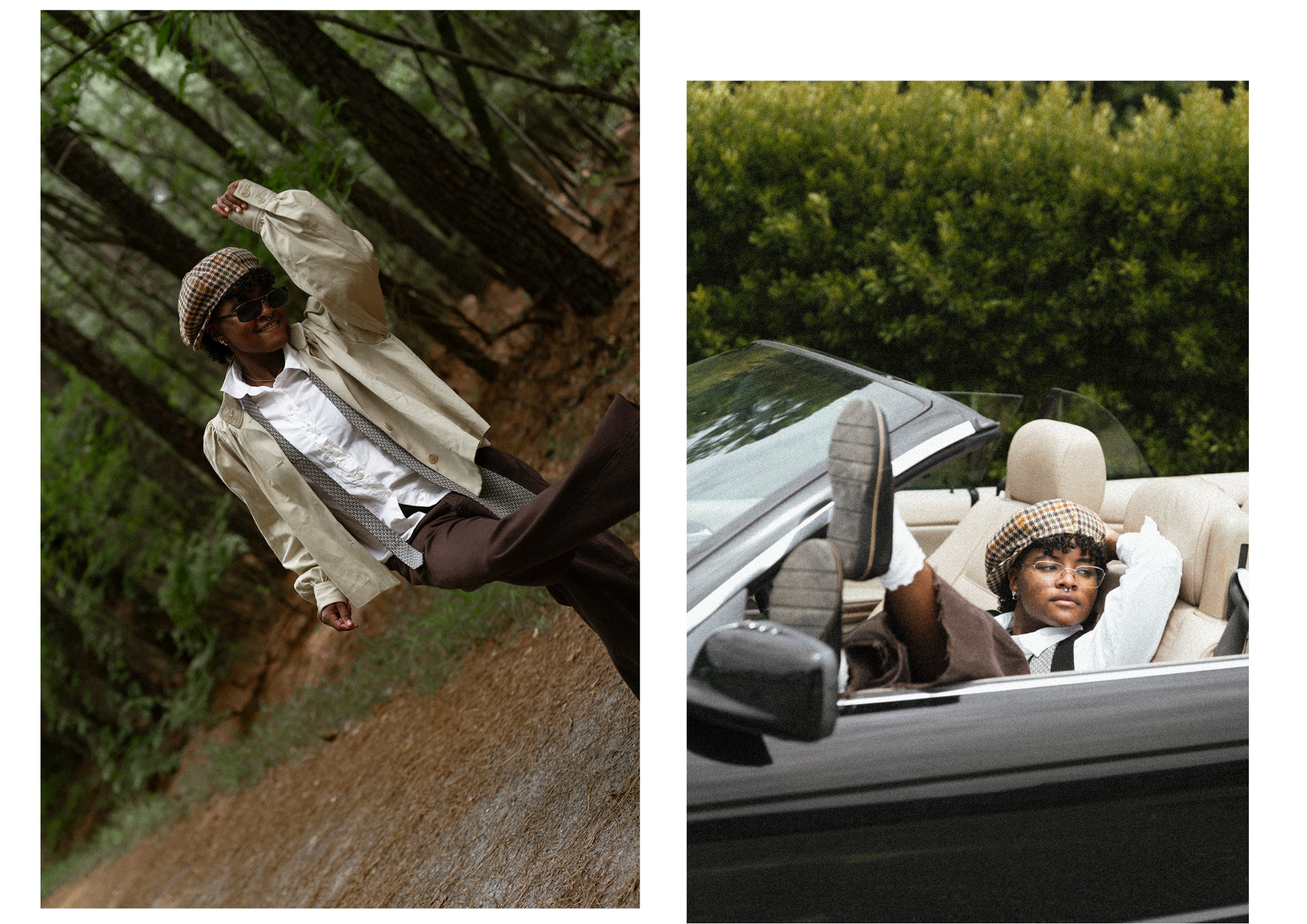
photos by Hytide Photography
Sydney J believes part of what makes music such a good vehicle for unpacking love is the way we can feel it in our bodies. In fact, while making her third album, love songs, the indie folk artist kept a list in her notebook, noting where in her body she could feel each track. One in her feet. Another deep in the center of her chest.
Following her 2025 project, folk songs, which Sydney J credits for locating her artistic identity, love songs acts as an extension, where the songwriter’s artistic maturity, comfort, and thematic vulnerability find new potential within her sound. The album, born from the intention to explore themes of love, feels intimate on several levels: from tapping into vulnerable lyrics about the stickier sides of romantic love, to listening for found instruments in an arboretum played by her siblings.
Just after love songs’ release, Sydney J sat down with warmly to chat about love, folk music, and the making of her artful new project. Here’s how it went…
—-
warmly: You speak beautifully about folk music as a genre. Let’s start there: What originally drew you to folk music?
Sydney J: I was in a band in high school with my brother, my cousin, and one of my really good friends, and he was super into music from the 60s – he basically listened to everything. I did not. I was listening to K-pop and generic pop music. I didn't really have good music taste at the time, but he would send me recommendations. I'd listen to it and be like, "This literally sucks. I can't stand this.” I kept trying to be open to it, and then everything just shifted. [It became] my preferred taste: Paul Simon, Bob Dylan, Joan Baez… all that stuff.
It became part of my life, in more than a listening-to-music way. It was healing to me internally. Also researching the history behind folk music, especially the 1960s and the protest movement– it goes beyond just good music. They really care about people and beautification, and that's also very important to me. So it was like two sides of the puzzle coming together.
The history of folk music, community, and protests is quite poignant right now. How do you take what you love about the tradition of folk music and make it feel like your own or put your own artistry on it?
I mainly focus on the intent behind my music. Rather than focusing on views or going viral, just creating connection with my listeners by talking to them, sending them gifts, or focusing on them as people. I want to help in a way rather than chasing fame.
So you recently released your third album, ‘love songs’! What felt different about making love songs than your previous albums?
This project was really different because, going into the studio and writing the songs, it was the first time I was emotionally connected to what I was creating. The whole time I was writing or recording, I was feeling it everywhere in my body. Whereas before, with my second album, folk songs, I was nervous all the time. I wanted to make things perfect. But when I was recording this record, I was laughing, I was crying, and I felt like all the decisions that I made were based on conveying emotion rather than making everything perfect. I can feel it even when I listen to the project myself.
Absolutely. I love that this one is called “love songs” and the project before was “folk songs”. It feels like there's something big in that simplicity. Can you talk about that choice?
I remember trying to brainstorm names for my third album. I’d named the second one “folk songs” because that was my introduction to say, “This is my artistic voice. This is where I want to go.” And I think I saw love songs as a part 2 to folk songs in a way. It still has the same artistic sounds, but it’s also a different level of maturity.
In folk songs, the theme was mainly about my hometown, my parents, my upbringing… And this one was more about personal experience, how I see love and heartbreak. So I thought it was the next chapter.
It feels like a natural extension. And speaking of love songs at large… music really tends to gravitate to love as a theme. Do you have a theory on why love is such a compelling topic for songwriters? Or maybe: Why does music feel like such a good outlet for unpacking and understanding love?
For me, using music to discuss love is different because it creates an emotion that you can feel in your body. If you're talking about love in the sense of happiness or connection, and you're listening to a song [about] that, and the instruments are conveying that emotion, you can feel it in your body. You're excited. You're happy. But then, if it's talking about heartbreak, you can also feel it in your chest in a way that's different than with poetry or painting. You can still feel those emotions, but it's different.
It's so true. Art forms all do different things. It's one thing to read something and feel intellectually moved by it or resonate with it, but music is very visceral.
As I was mixing the record, I remember writing down where I feel each song in my body and how it pertains to the emotion in this little book that I carry. Sometimes I would listen to it, and I was like, "Oh, I really feel this song in my feet.” Or with some of the sadder ones, I was like, "I definitely feel that in the middle of my chest.” Every song sat in a different place. I thought that was very powerful.
So interesting. And did those feelings ever change as the tracks came to life?
It definitely did change because I've been working on this record for about a year. I started writing it last August, and it was really interesting to see how the songs and the emotion changed. But also, my connection to it changed. Specifically with “still”- I wrote that one in early August, and it would make me cry all the time. In the actual recording of the song, I'm breathing at the end because I was about to cry.
When I listen to it, it doesn't carry that weight anymore. Which is also beautiful because it shows how we process emotions. While something can feel super heavy at one point, as time goes on, it can heal.
The other thing I love about the title "love songs" is that I typically think about ‘love songs’ as love letters. They’re songs that say, “I love you.” But the songs on your project say all kinds of things. Of course, they have that through line of love. But it's much more nuanced. Where did that choice to include so many angles of romantic love within love songs come from?
That was really important to me because sometimes love can be commercialized in a way. It's like we only focus on one aspect of it– usually the happy, euphoric feelings that you feel when you're falling for someone. But then we don't really talk about the times when it's like: I don't know what this person is feeling. I don't know if they like me. Or: This person broke my heart. I feel horrible… the more nuanced feelings of love. They're more difficult topics. I find it's easy for people to brush it off because they don't want to deal with it, but I think it's important to deal with it and not be like, “love is just supposed to be one thing”. That's just not true. I experienced it in my own life: If love is supposed to be one thing, why am I feeling so many different emotions connected to this one thing?
Yes, it's so inherently overlapped with everything you're already carrying. There's no way for love to “just be love”… What even is love??
That's what I was asking myself the whole time.
Perfect. So you produced this whole project on your own— so cool. How is it to be both a songwriter and a producer and watch this come to life so independently?
Some days it's great, and some days it really sucks. I enjoy songwriting so much, but then when it comes time to get behind the computer to mix it and master it– that’s the hard stuff. It is nice to be able to have full control over what I want the song to become. Doing both jobs, it becomes whatever I hear in my head after I finish the songwriting process. I know exactly what I want to bring to life, rather than trying to communicate that to someone else and get on the same page. I do enjoy that aspect of it. But sometimes I wish I could just go in there, write the song, record it, and then be like, “you do all the real work”.
I also love how the record lives as a whole. I'm always intrigued when artists use an intro or a kind of overture in their projects, as you do with “arboretum”. Why lead us into the project that way? And what inspired it?
What inspired it actually happened maybe a week ago. My whole family went on vacation to the mountains, and all my siblings were in the car. We were with my parents, and we went to this arboretum nearby. We were walking around the gardens and the hiking paths. I was looking up at the trees and thinking, “This is how my album feels to me.”
As we were leaving, they had some musical instruments set up. They had a xylophone made out of wood pieces, which [you can hear] at the end of “pain”-- it's my siblings and me playing the little wood xylophone. Then they also had these metal pipes. My brother and sister were playing the xylophone, and I was just dancing and looking up at the trees, and I thought, this is what that album feels like. I felt the same emotion in my body. So I started playing the metal chimes. I realized [it was] in the same key as the first song, so I was like, “…let me just record this on my phone really quick.” I did that, and then I added it in as an intro. It also shows up on “wishing” at the end. It was in the same key again, so I cut a little bit of it and added that in to create cohesiveness.
I have butterflies! It’s so moving how many details of this project are so personal– in addition to the very vulnerable songwriting. To weave moments like that throughout the listening experience is so special. There seems to be a lot of thoughtfulness in the structure and the listening experience of album as a body of work. I'm interested in that choice in a time when people aren't necessarily always consuming music in albums as much as singles. Why was all of that important to your production process?
It was really important to me because I listen to the demos of the songs that I write when I'm walking around in nature. So in a way, it was really important for me to reflect that experience sonically. For this specific record, I was mainly in Virginia and Vermont. When I was mixing “butterfly”, I was staying in this cabin in Vermont and hearing insects and birds and stuff like that. I wanted the listener to feel what I was feeling. Because instead of it just being a song, it actually lives in the world that you experience.
Also, as I was dealing with the personal experience I was writing from, I kind of clung to nature to find peace.
When did you start writing or playing music? And how did that lead you here on your musical journey?
I started playing piano when I was five. And then I started playing violin at age eight. I played that till I switched to viola at 15. I'm currently in school for viola performance, even though that's not really my passion anymore. But that's a story for another day… I started writing when I was 15, because I was very into Billie Eilish. She had just put out her first album, and I was like, “She's literally the same age as me. I could do this too.” She and Finneas were making stuff in their bedroom. So I started making stuff on GarageBand, and then that turned into other digital workstations. I kept working at it, and it was fun. Now, we're here.
Do you feel like classical music training comes up at all in your folk music writing?
I feel like in writing the arrangements for my songs, it definitely comes up. In this album, especially, it shows up in the strings, which I did myself.
You mentioned this is an album that you want to live in the world–maybe as a complement to nature. Is there anything else that comes to mind when you envision how ‘love songs’ lives in the world, how it's listened to, or how it's consumed? Anything you hope or wish for it to take on?
Mainly a sense of comfort. For me, when I was actively living through the experience that inspired this project, I had a lot of questions that I was asking the people around me. And questions I was asking myself that I didn't really have answers to. They weren’t questions people could give answers to that I could relate to in a way. So if people listen to it and feel like, "Oh, I feel that way too. Someone else feels this way, so this is normal, and I'm not strange, and everything is gonna turn out okay…” I think that's mainly what I want.
One last question for fun: where are you finding inspiration lately? Either for music or life in general?
My plants. Also, the mountains. I drove through the Shenandoah Mountains recently. That was so beautiful. And then Big Thief. Y'all know I love Adrianne. I love all of them.
💿 Listen to 'love songs'
📻 keep up with sydney j on Instagram, tiktok, & online
—
Thanks for engaging with indie arts & culture media! If you love warmly, you can show your support by becoming a subscriber on Substack, purchasing a zine or merch, or Buy Me a Coffee.